
 Many companies have closed the books on 2012 and are now looking forward to the rest of 2013. One of the major things companies tend to look at this time of year are their marketing plans. When it comes to marketing plans companies are starting to integrate a more tech-based approach. As such they are eager to know what marketing oriented tech trends are likely to emerge throughout 2013.
Here's an overview of what we think will be the five biggest tech-marketing related trends for the coming year.
1. Increased mobile demands With a crop of excellent, affordable and capable devices released this past year, it's a sure thing that many of your clients will be getting new devices for christmas. This will result in an increased demand for mobile friendly sites that are simpler, lighter on text and more interactive. 2013 will be a good year to review your website and optimize it for mobile users.
2. Increasing local demand With the increasing adoption of mobile devices many users are changing the way they use the Internet. Computers and laptops are increasingly being used for general searches while mobile devices are used almost exclusively for local searches. If you don't have a local presence that's optimized for local searches (e.g., Google Places) you will be missing out.
This 'localization' trend is referred to as SoLoMo (Social-Local-Mobile) and is the idea of businesses adding local information to their online platforms to capitalize on the increase of mobile users. 2012 has seen many companies begin to really use this by pushing locally oriented ads to mobile users. It's highly likely SoLoMo will become even more integral in 2013.
A recent infographic from Monetate highlights the importance of SoLoMo and how mobile users shop. The most interesting finding in relation to local search is that many customers use their mobile device to find out what's around them, and then will purchase either in-store or online. This trend should continue well into 2013.
3. Apps with better mobile ads Let's face it, smartphone users have gone app crazy. In the past few years many of the apps have come to include mobile ads shown to customers. Many of these ads aren't targeted to the user, but this is slowly changing as ads that are shown are becoming more trustworthy and targeted. There should be an increase in both the number of click-throughs and apps through 2013 which means it may be the perfect time to either develop your own app or invest in app advertising.
4. Increasing adoption of new payment methods The way customers pay for their purchases is changing. With the steady adoption of NFC (Near Field Communication) technology, mobile payment systems like Google Wallet, and coupon systems like Apple's Passbook, 2013 should see a shift away from paper and plastic to electronic.
This has already started with huge companies like Starbucks announcing they will be launching payment services provided by Square which allows for mobile payment. It's not hard to see that 2013 will be a big year for mobile based payment.
5. More mobile marketing competition With the general increase of mobile adoption it makes sense that 2013 will likely see more companies looking into mobile related marketing. This will make this medium a little more crowded and competitive. What this equates to is that companies should move to take advantage of mobile related marketing, or at the very least take steps to optimize their processes for mobile.
All signs point to 2013 being a year of mobile oriented advancements. Indeed, most of the customer/consumer oriented tech advancements of the past two years have almost been exclusively mobile oriented. Mobile adoption and the data that comes from the different advancements and trends should be something companies factor in when they are making operational decisions for the coming year. If you would like to learn more, please contact us.
 The venerable Winston Churchill once said, "to improve is to change; to be perfect is to change often." There is great wisdom in those words; they pretty much summarize the tech industry. We think that Facebook takes Mr Churchill's words to heart as they are always changing. The latest development brings a whole bunch of updates, mostly related around security and how Facebook presents and uses your information.
 In the modern business climate, many businesses have had to tighten their belts. This constriction highlights the need to maximize profits while minimizing costs across all departments. When it comes to IT, many business managers are unsure of how to go about this. To help, we have written a three part article on how you can maximize tech resources and improve your revenue.

 Virtualization is a buzzword thrown around the tech community on a seemingly hourly basis. From the outside looking in it seems that everything is, and has to be, virtualized these days, and if it isn't you're lagging behind the times. This has led to somewhat of a craze, that can be quite confusing at times. One of the more popular forms of virtualization that has got many experts talking is the somewhat confusing issue of server virtualization.
 One of the most important business tools is email. It allows us to stay in touch with the office and each other regardless of our location. While email is useful, it's not perfect. One issue is that we receive so many emails, with up to a 100 a day or more. This has led to many an overload and meltdown; there's just simply too many emails to get through. So, what do most people do? Delete them. However, this deletion could lead to problems.
 Security issues seem to follow cycles. An exploit or security weakness is found in an operating system and all of a sudden, there's tons of hackers taking advantage of it. Then, the OS developers and security companies develop and implement a fix and things die down for a few weeks, only to have another exploit submerge. Microsoft knows this all too well, and has implemented some new security features into Windows 8 that will hopefully curb the cycle.
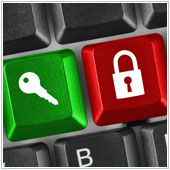 Security is a hot button issue, with nearly every company focusing on some form of security and many focusing on security related to the technology they use. This ensures company networks are secure from attack, and businesses often have drafted usage policies for employees to follow when using their computers. While this is a good step, there is one area that's usually glossed over - security of mobile devices. One common way to ensure these are secure is through the use of encryption.

